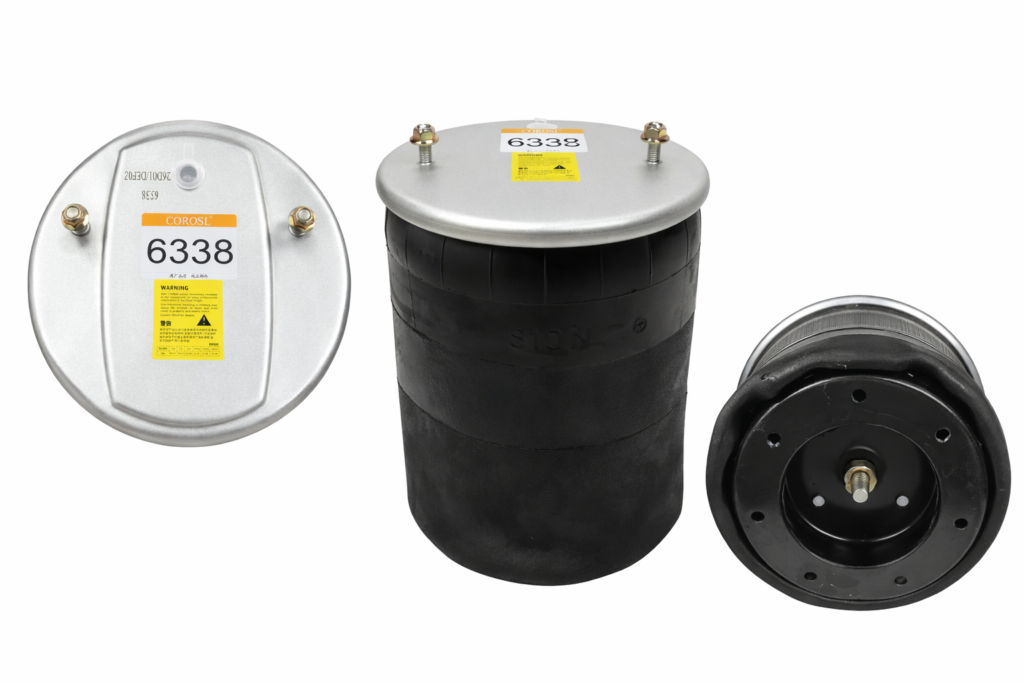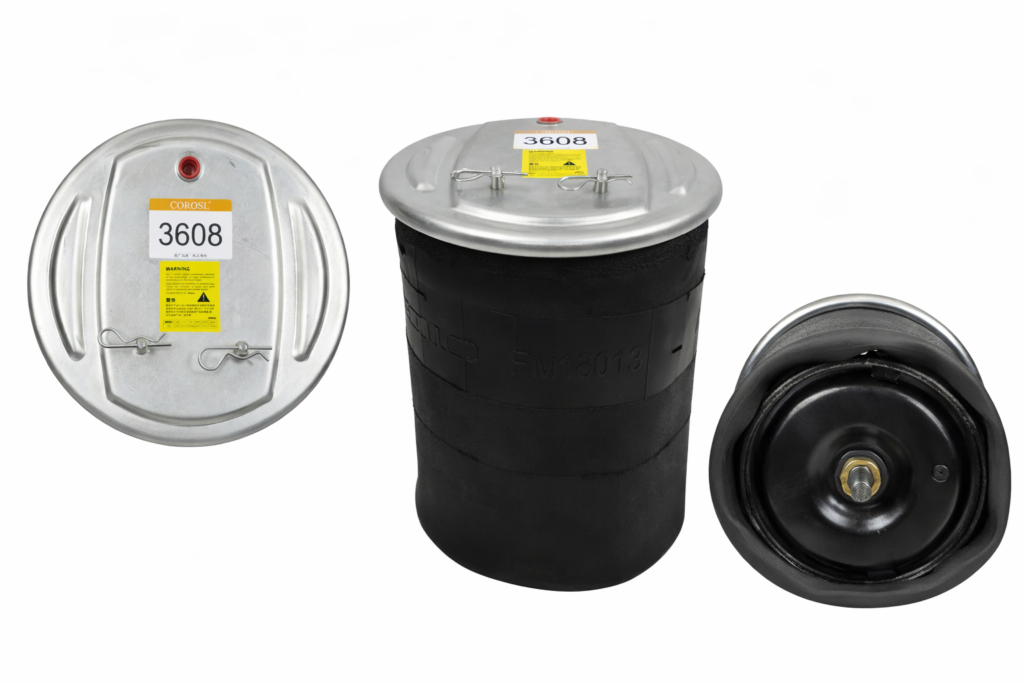
分类: Uncategorized

  • From Design to Validation: How Air Springs Are Developed

    See how air springs are developed through product design, simulation, sample testing, and validation for real commercial vehicle applications.

    Keywords:

    • air spring development
    • air spring design
    • CAE analysis for suspension
    • air spring validation
    • commercial vehicle product development

    Air spring development is not only a matter of copying dimensions. A reliable product usually goes through several stages, including project definition, structure design, sample trial production, test verification, process design, and material evaluation. Each stage influences whether the final product can meet application needs in stiffness, durability, sealing, and installation.

    Modern development work often combines CAD design with CAE analysis. Design software is used to build product geometry, mounting points, and assembly structures. Simulation tools can then help analyze product compression behavior, stiffness trends, deformation paths, burst pressure risk, and, in some cases, vibration or load response. For suspension-related products, this kind of analysis helps engineers reduce trial-and-error time and optimize critical dimensions before physical testing.

    For chassis air springs, key design topics may include cord angle, expansion diameter, working height, piston shape, rubber curvature, and movement path. For cab air springs, engineers also study the effect of integrated dampers, sealing structures, and housing strength. For seat air springs, compact structure and user comfort become important design drivers.

    But design software alone is not enough. Real sample production and physical testing are still necessary. Materials behave differently under real heat, pressure, aging, and fatigue conditions. Therefore, product development is most effective when simulation, prototyping, and laboratory validation support one another.

    From a website perspective, this topic is useful because it shows buyers that air suspension parts are engineered products, not just trading items. It also supports your position when customers ask why detailed confirmation is needed before a quotation. The answer is simple: performance depends on application-specific design, and correct matching matters.

    This article can also support more technical website pages about vibration isolation, load curves, burst testing, or manufacturing capability. Used well, it helps your brand sound knowledgeable and reliable without requiring you to publish confidential design details.
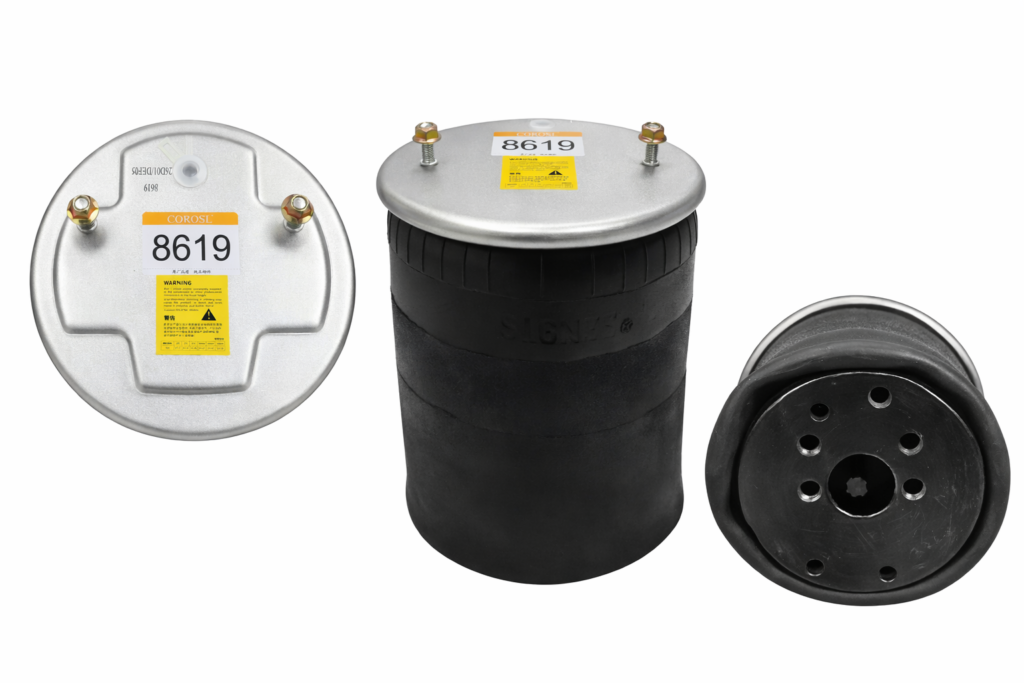
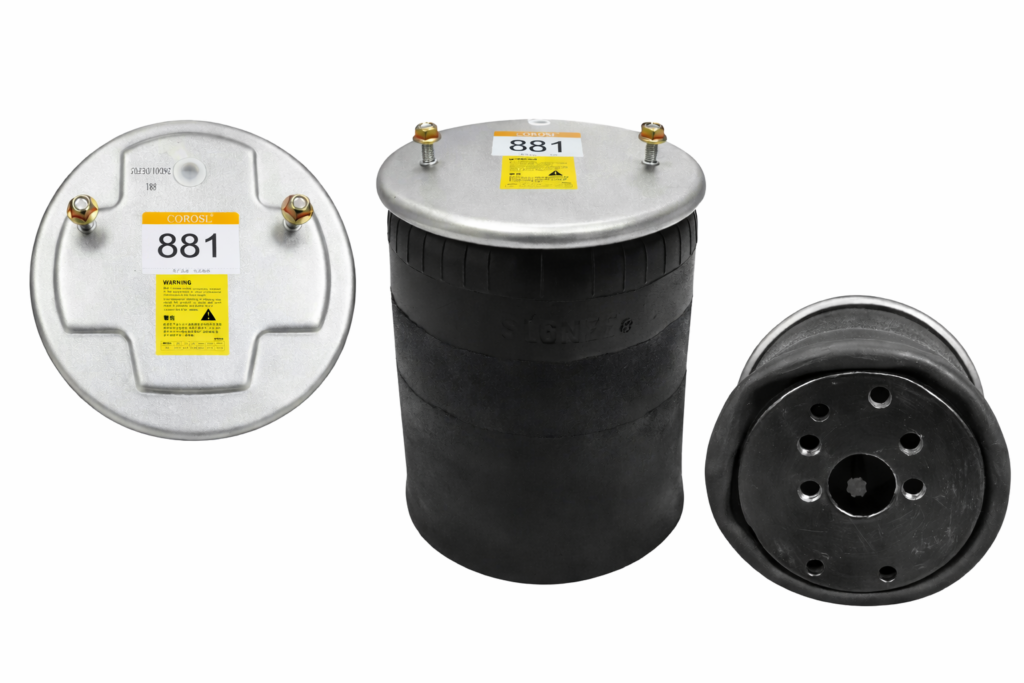
  • How Air Spring Performance Is Tested: Burst Pressure, Leakage, Fatigue, and More

     Learn the key tests used to evaluate commercial vehicle air springs, including burst pressure, leakage, negative pressure, and durability testing.

    Keywords:

    • air spring testing
    • burst pressure test
    • air spring leakage test
    • fatigue test for air springs
    • commercial vehicle suspension testing

    For buyers of commercial vehicle suspension parts, product appearance is never enough. Air springs are pressure-bearing components that operate under repeated load, heat, vibration, and deformation. That is why testing is a major part of product validation. A professional supplier should be able to explain not only what the product is, but how its performance is verified.

    One of the most common evaluations is burst pressure testing. In this test, the air spring is pressurized under controlled conditions until failure, and the maximum pressure before rupture is recorded. This helps engineers evaluate structural safety margin and compare design strength between products. Another basic check is leakage performance. The product is inflated to the required condition and monitored for pressure loss or leak rate over time.

    Negative pressure and radial expansion are also useful evaluation items in some applications. These tests help confirm how the product behaves under non-standard internal pressure or changing shape conditions. For commercial vehicle parts that face real road stress, the most important long-term indicator is often durability. Fatigue test benches repeatedly compress and extend the air spring under controlled stroke, frequency, pressure, and environmental conditions. This helps simulate long-term service life.

    In engineering practice, testing is linked with design targets. For example, stiffness, outer diameter change, bearing capacity, and natural frequency may all be analyzed or measured. For integrated suspension systems, vibration isolation and dynamic behavior under real road data can also be studied. This matters because customers increasingly care not only about whether the part fits, but whether it performs close to OE expectations.

    For your website, this article can build trust by shifting the conversation from “cheap replacement part” to “validated engineered component.” You do not need to publish confidential test standards or internal documents. Instead, you can explain the categories of tests and why they matter to end users and professional buyers.

    A clear testing article also supports sales communication. When customers ask about life, quality, or comparison with OE, you already have content that explains how performance should be evaluated. That makes your communication look more professional and reduces the need to answer every quality question from zero.

  • Seat Air Springs in Commercial Vehicles: Small Part, Big Comfort Difference

     Seat air springs improve driving comfort and reduce fatigue in commercial vehicles. Learn the structure, functions, and benefits of seat air springs.

    Keywords:

    • seat air spring
    • driver seat air spring
    • truck seat suspension
    • seat air suspension
    • commercial vehicle comfort parts

    Seat air springs are often smaller than chassis or cab suspension parts, but they play an important role in daily vehicle operation. In commercial trucks, buses, and working vehicles, the driver may remain seated for many hours. A well-matched seat air spring helps reduce repeated vibration and shock, improving comfort and reducing fatigue.

    A typical seat air spring assembly may include the rubber section, a pneumatic fitting, a nylon piston, a nylon upper cover, and a metal pressure ring. Although the structure is relatively compact, the product still needs reliable air sealing, stable elasticity, and good fatigue resistance under repeated compression cycles.

    Because seat air springs are directly related to the human experience of the vehicle, customers often care about practical questions: Is the ride softer? Does it improve seat stability? Is the part durable enough for long-distance use? These are exactly the kinds of concerns that a website article should address. Product content should not only list part names, but explain the usage value in real conditions.

    For B2B customers, seat air springs may be relevant in aftermarket replacement, new seat assembly, or fleet maintenance applications. Matching is still important. Similar-looking seat air springs may differ in height, stroke, fitting angle, mounting form, and air inlet design. As a result, checking application details is always safer than assuming visual similarity means interchangeability.

    From a technical standpoint, seat air springs must remain stable under repeated movement and variable loads. The choice of rubber compound, reinforced cord material, molded plastic parts, and metal retaining rings all affects durability and performance. A poor-quality seat air spring may leak, collapse, or lose ride comfort quickly in service.

    This topic works well on a product website because it is easy for customers to understand. It can be written in a practical tone, focusing on driving comfort, replacement convenience, and matching support. It also helps your website show that your product range covers not only heavy-duty chassis applications, but also smaller but high-value comfort components.

  • Cab Air Springs: Why They Matter for Driver Comfort and Vehicle Vibration Control

    Understand how cab air springs work, what parts they include, and why they are important for vibration isolation and driver comfort in commercial vehicles.

    Keywords:

    • cab air spring
    • cab suspension air spring
    • truck cabin suspension
    • driver comfort suspension
    • commercial vehicle vibration isolation

    Cab air springs are designed to reduce the vibration transmitted from the chassis into the driver cabin. In commercial vehicles that operate on long routes, rough roads, or heavy-duty working conditions, cab suspension plays a major role in comfort, fatigue reduction, and overall driving quality.

    Compared with chassis air springs, cab air springs are usually smaller but structurally more integrated. A typical cab air spring assembly may include a rubber capsule, shock absorber, metal gland, upper and lower rings, sealing rings, rubber bushings, pneumatic fittings, a nylon housing or related body parts, and buffer components. Because of this complexity, a cab air spring is more than a simple rubber component.

    The function of the cab air spring is not only to carry load. It must also manage multi-directional vibration, control movement, and work together with the shock absorber. This means that product development requires attention to compression, rebound, radial movement, torsion, and fatigue performance. Buyers often focus on appearance or OE number, but the real quality difference is hidden in structure design, material selection, and testing quality.

    From a website content perspective, cab air springs are a good topic because many customers are familiar with the pain points they solve. Excessive cabin vibration leads to poor comfort, faster driver fatigue, and a lower-quality driving experience. A properly matched cab air spring helps reduce these issues and supports more stable cabin movement under real road conditions.

    When quoting cab air springs, sellers should avoid oversimplified answers such as “all available” or “same product.” Cab air springs are application-sensitive parts. Vehicle platform, mounting method, damping coordination, and detailed dimensions should all be checked. If a customer provides OE number, drawing, or clear product photos, the matching process becomes much more reliable.

    For content marketing, this article can be linked with related pages such as “How vibration isolation is tested,” “How we check durability,” or “What is included in a complete air spring assembly.” That helps the website look more professional while giving customers useful decision-making information.

  • Chassis Air Springs: Structure, Function, and Key Parts

    Explore the structure of chassis air springs, including rubber bellows, upper covers, pistons, and buffer blocks, and learn how they work in commercial vehicle suspension.

    Keywords:

    • chassis air spring
    • truck air spring structure
    • air spring piston
    • air spring upper cover
    • air suspension parts

    A chassis air spring is one of the core load-bearing components in a commercial vehicle air suspension system. Its main job is to support the vehicle load while reducing the impact and vibration transferred from the axle to the frame. In trucks, trailers, and buses, chassis air springs are widely used because they offer a more adaptive and comfortable suspension solution than rigid steel-only systems.

    From a product structure perspective, a chassis air spring is usually made up of a rubber bellow, an upper cover, a piston or lower base, a buffer block, and, in many cases, a sealing plate or related mounting hardware. The rubber bellow is the flexible part that inflates with compressed air. The upper cover and piston define the assembly shape and connection points. The buffer block provides extra protection under high compression conditions.

    Material choice matters. The reinforcing cord inside the rubber section is often selected for strength and fatigue resistance. The rubber compound must balance flexibility, sealing performance, and durability. Metal parts such as covers and pistons must maintain shape, corrosion resistance, and assembly accuracy. The final performance of the product depends on how these components work together under load, pressure, and repeated movement.

    Customers may think all air springs are the same, but in reality, the chassis air spring design depends on vehicle platform, stroke, mounting layout, expansion diameter, stiffness target, and durability requirements. Even products that look visually similar may differ in internal cord design, plate configuration, or assembly dimensions.

    When discussing chassis air springs with buyers, it is helpful to clarify whether they need a complete assembly or only selected components. Questions such as whether the quotation includes top and bottom plates, whether the piston is plastic or metal, and whether the product is supplied as a service assembly are all common in real quotations.

    A good website article on chassis air springs should not only describe the structure, but also explain why proper matching matters. Correct product selection affects load support, ride height, vibration control, and service life. That is why OE number confirmation, application matching, and drawing-based checking are often necessary before final quotation.

  •  What Is a Commercial Vehicle Air Suspension System?

    Learn how commercial vehicle air suspension systems work, where they are used, and why they matter for ride comfort, load stability, and vehicle durability.

    Keywords:

    • commercial vehicle air suspension
    • truck air suspension system
    • air springs for trucks
    • cab air spring
    • seat air spring

    A commercial vehicle air suspension system uses compressed air and elastic suspension components to support the vehicle’s weight, absorb road shock, and improve overall ride quality. Compared with traditional steel spring systems, air suspension gives operators more flexibility in ride height, vibration isolation, and load balancing.

    In practical applications, the system is usually divided into three major product positions: chassis air springs, cab air springs, and seat air springs. Chassis air springs are installed between the axle and the frame to carry the load and reduce impact from uneven roads. Cab air springs help reduce vibration transferred into the driver’s cabin. Seat air springs are used in driver or passenger seats to improve comfort during long-distance operation.

    For fleet operators and aftermarket buyers, air suspension matters for several reasons. First, it helps improve comfort, especially in trucks, buses, and trailers that operate on mixed road conditions. Second, it can improve the vehicle’s stability when the load changes. Third, it helps protect other vehicle components by reducing harsh vibration and shock transmission.

    Modern commercial vehicle air suspension systems are not just rubber products. A typical system also involves metal covers, pistons, sealing structures, buffer blocks, shock absorbers, air fittings, and related mounting parts. Because the system works under repeated load, heat, pressure, and vibration, both design and material quality are critical.

    When customers ask about air suspension, they often want to know whether the product is for the chassis, the cabin, or the seat. They may also ask whether the quotation covers only the rubber bellow or the full assembly, including the top and bottom plates. These details should be clarified early in communication to avoid mistakes in model matching and price confirmation.

    For an independent website, this topic is a strong entry article because it introduces the full product family while helping customers understand the difference between air suspension positions. It can also lead naturally into more detailed pages for chassis air springs, cab air springs, seat air springs, testing capability, and manufacturing processes.

  • Commercial Suspension Air Spring for Reliable Ride Support

    Slug

    commercial-suspension-air-spring-reliable-support

    Meta Description

    A commercial suspension air spring designed for stable load support, reduced vibration, and reliable aftermarket replacement in heavy-duty vehicle applications.

    Commercial Suspension Air Spring for Reliable Ride Support

    In heavy-duty commercial suspension systems, air springs are essential for maintaining ride support, absorbing road vibration, and helping the vehicle stay balanced under load. A properly matched air spring can improve suspension performance and support a more reliable driving experience in transport operations.

    This type of air spring is used in suspension applications where stable support, durable structure, and practical replacement value are important. It is suitable for customers who need a product that can help reduce road impact, improve suspension response, and support long-term aftermarket use.

    For suspension replacement customers, the product is usually judged by more than one visible marking. In practical sourcing, buyers focus more on:

    • structure and mounting layout
    • overall product shape
    • sealing performance
    • bellows quality
    • suitability for suspension replacement

    That is why product introduction content should not only mention market recognition, but also explain what this kind of air spring actually does in real suspension systems.

    Main Product Advantages

    A commercial suspension air spring can help deliver:

    • stable support under load
    • reduced vibration during transport
    • smoother suspension response
    • practical replacement value for aftermarket buyers
    • reliable performance in heavy-duty operating conditions

    Why This Type of Product Is Useful

    For distributors and importers, this kind of product is valuable because it is easy to introduce to customers who need practical suspension replacement solutions. It also works well in aftermarket communication because buyers often search by sample, structure, or known market reference habits.

    Looking for a Suspension Air Spring Supplier?

    If you are sourcing commercial suspension air springs for replacement or distribution, feel free to contact us with your sample photos or application details.

    Our Contact Information

    Gmail:shandongshuru@gmail.com

  • Heavy-Duty Trailer Air Spring for Stable Suspension Support

    Slug

    heavy-duty-trailer-air-spring-stable-suspension-support

    Meta Description

    A heavy-duty trailer air spring designed for stable load support, reduced vibration, and reliable suspension performance in trailer and semi-trailer applications.

    In trailer and semi-trailer suspension systems, the air spring is one of the most important components for load support, ride stability, and vibration reduction. A well-designed air spring helps the suspension system work smoothly under different road and load conditions, making it a key product in both replacement and maintenance markets.

    This product belongs to the rolling sleeve air spring category, which is widely used in commercial trailer suspension applications. It is designed to help absorb road shock, reduce suspension impact, and maintain stable support during transport. In heavy-duty operating conditions, a reliable air spring can improve suspension performance and support more stable vehicle operation.

    From a structural point of view, this type of air spring features a metal top plate, reinforced rubber bellows, air fitting inlet, and lower mounting structure. These parts work together to provide air-cushioned support while helping the suspension respond more steadily in real working conditions.

    Main Product Advantages

    A heavy-duty trailer air spring can provide:

    • stable load-bearing support
    • reduced road vibration
    • smoother suspension response
    • reliable sealing performance
    • practical replacement value for aftermarket buyers

    For distributors, importers, and repair customers, this kind of product is especially useful because it fits common suspension replacement demand in trailer and semi-trailer markets. It is suitable for customers who need stable supply, dependable structure, and practical aftermarket support.

    What Buyers Usually Care About

    When sourcing trailer air springs, customers usually focus on:

    • overall structure
    • mounting layout
    • rubber bellows quality
    • sealing reliability
    • suspension application compatibility

    That is why a product like this is not only judged by appearance, but also by how well it fits the actual suspension system and operating condition.

    Typical Applications

    This type of air spring is commonly used in:

    • trailer suspension systems
    • semi-trailer suspension systems
    • commercial vehicle aftermarket replacement
    • heavy-duty transport applications

    Need More Product Information?

    If you are looking for heavy-duty trailer air springs for replacement or distribution, feel free to send us your product photo or application details for further confirmation.

    Our Contact Information

    Gmail:shandongshuru@gmail.com

  • Heavy-Duty Air Spring for Trailer and Semi-Trailer Suspension Systems

    Slug

    heavy-duty-air-spring-trailer-semitrailer

    Meta Description

    Learn how a heavy-duty air spring supports trailer and semi-trailer suspension systems with stable load capacity, reduced vibration, and reliable suspension performance.

    Heavy-Duty Air Spring for Trailer and Semi-Trailer Suspension Systems

    Heavy-duty trailer suspension systems require air springs that can provide reliable support under continuous load and changing road conditions. In this type of application, the air spring is not only a cushioning component, but also an important part of suspension balance and vehicle stability.

    This product belongs to the trailer and semi-trailer air spring category and is designed for commercial suspension use where stable structure, strong sealing performance, and dependable support are essential. It helps reduce vibration, improve suspension response, and support smoother operation during transport.

    For buyers, one of the biggest concerns in selecting a heavy-duty air spring is long-term reliability. In real applications, customers usually expect the product to perform well in:

    • load-bearing support
    • road shock reduction
    • suspension stability
    • rubber bellows durability
    • practical aftermarket replacement

    Compared with low-quality replacement parts, a well-made air spring offers more consistent performance and better fit for suspension systems that need dependable working stability.

    What Buyers Usually Look For

    When sourcing this type of air spring, customers usually focus on:

    • mounting structure
    • overall product form
    • sealing quality
    • bellows durability
    • compatibility with trailer suspension systems

    Because of this, heavy-duty trailer air springs are widely used in aftermarket supply and replacement-focused purchasing.

    Suitable Market Applications

    This type of air spring is suitable for:

    • trailer suspension replacement
    • semi-trailer aftermarket supply
    • axle and suspension service markets
    • commercial vehicle parts distribution

    Need Help with Product Confirmation?

    If you are looking for heavy-duty air springs for trailer or semi-trailer suspension systems, please contact us with your sample photo or application details for further checking.

    Our Contact Information

    Gmail:shandongshuru@gmail.com

  • Trailer Air Spring for Stable Load Support and Suspension Performance

    Slug

    trailer-air-spring-stable-load-support

    Meta Description

    A practical introduction to a trailer air spring used for stable load support, reduced vibration, and improved suspension performance in commercial vehicle applications.

    Trailer Air Spring for Stable Load Support and Suspension Performance

    In commercial trailer suspension systems, the air spring is one of the key components responsible for load support, vibration reduction, and ride stability. A well-designed air spring helps the suspension system work more smoothly under different road and load conditions, making it an important product in both the replacement market and long-term maintenance.

    This type of air spring is commonly used in trailer and semi-trailer suspension applications where consistent support and stable performance are required. It helps absorb road shock, reduce suspension impact, and improve overall driving balance, especially when the vehicle is operating under varying loads.

    For buyers in the aftermarket, a trailer air spring is not only selected by appearance. More importantly, customers usually care about structure, mounting layout, sealing performance, rubber quality, and whether the product can provide reliable service in real transport conditions.

    In practical use, a good trailer air spring should offer:

    • stable load-bearing support
    • good air tightness
    • reliable rubber bellows performance
    • dependable suspension response
    • suitability for heavy-duty operating conditions

    For distributors, wholesalers, and repair customers, this kind of product is especially valuable because it serves a wide range of trailer suspension replacement needs. It is suitable for customers who need practical replacement support, stable supply, and reliable aftermarket performance.

    Why This Product Matters

    Trailer suspension parts are expected to perform under continuous vibration, heavy load, and changing road conditions. An air spring that combines stable support with durable structure can help improve service life and reduce maintenance pressure in real-world use.

    Need More Product Information?

    If you are looking for trailer air springs for commercial suspension systems, feel free to contact us with your product photo, dimensions, or application details for further confirmation.

    Our Contact Information

    Gmail:shandongshuru@gmail.com